


Publié par ITAMILANO
le 19/05/2026

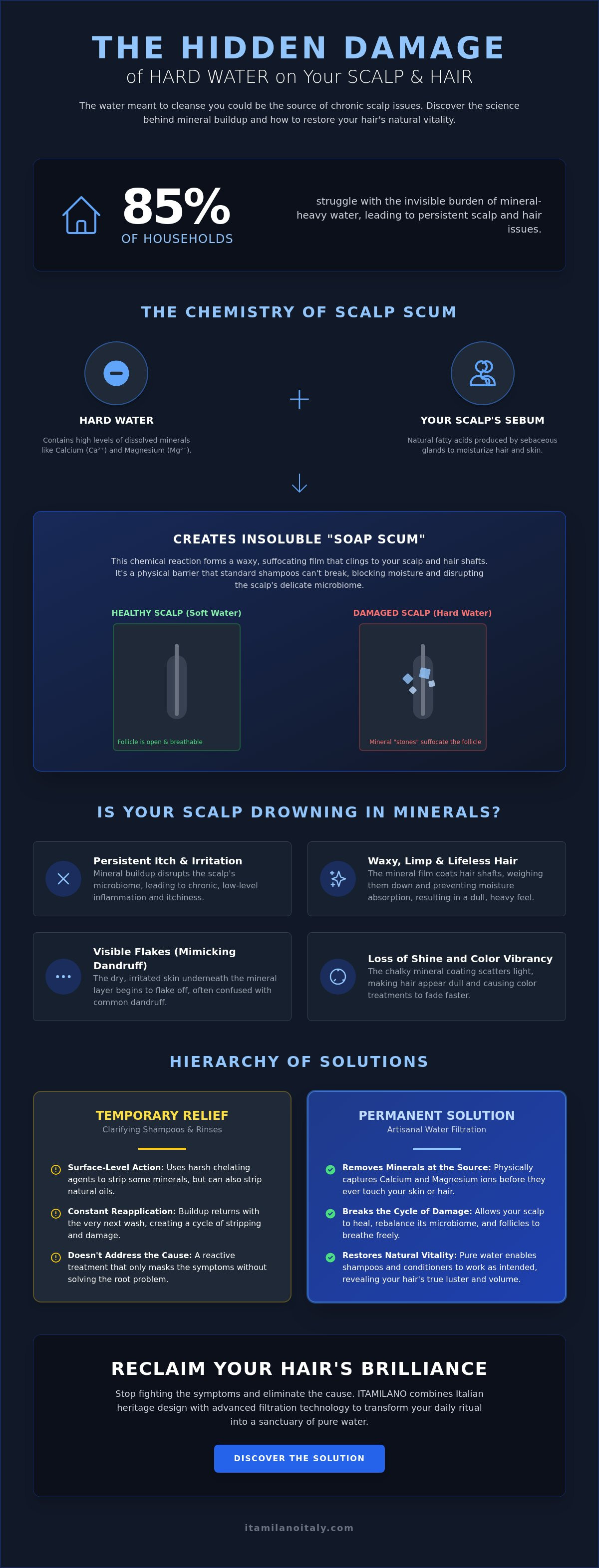
What if the very water meant to cleanse your hair is actually the architect of its decline? While you might invest in the finest botanical cleansers, approximately 85% of households struggle with the invisible burden of mineral-heavy water. You likely feel the frustration of a persistent itch or hair that remains waxy and limp despite a thorough wash. You're not alone in wondering, can hard water cause scalp buildup, especially when visible flaking begins to mimic the appearance of dandruff. It's a quiet, chemical transformation where calcium and magnesium bind to your natural oils, creating a suffocating film that no standard soap can easily break.
At ITAMILANO, we believe in the sanctity of the daily ritual and the enduring quality of the materials that touch your skin. This article explores the scientific link between these stubborn minerals and chronic scalp irritation, offering a path to reclaim the natural luster of your hair. We'll examine how these deposits disrupt your scalp’s delicate microbiome and provide the definitive steps to restore your hair’s volume. From the precision of specialized filtration to the artistry of restorative rinses, discover how to protect your legacy of health and vitality.
Key Takeaways
- Uncover the precise chemical reaction between dissolved minerals and your natural oils that creates a suffocating, insoluble film.
- Learn to identify the subtle signs, such as a waxy residue and persistent itch, that answer how can hard water cause scalp buildup.
- Evaluate the hierarchy of solutions for mineral removal, distinguishing between the temporary relief of clarifying rinses and the permanence of artisanal filtration.
- Discover how the marriage of heritage design and filtration technology serves as a vital companion in preserving your hair’s natural vitality.
- Reclaim the lost brilliance and volume of your hair by understanding the essential role of water purity in your beauty ritual.
The Scientific Link Between Hard Water and Scalp Buildup
When you step into the shower, the water should be a vessel of renewal. In many regions, however, the water carries a heavy burden of dissolved minerals, primarily calcium and magnesium. This mineral density transforms a simple ritual into a source of hidden distress. You might notice that soft water feels almost slippery on the skin, a sensation of pure hydration. Hard water behaves differently. It leaves the scalp feeling "squeaky" but never truly clean. This friction is the first tactile warning of mineral accumulation. To truly understand what hard water is, one must look beyond the clarity of the stream and consider the microscopic elements that remain long after you've dried your hair.
The scalp is not merely a foundation for hair growth; it's a sophisticated extension of the skin on your face. It possesses a high density of sebaceous glands and hair follicles that require a clear, breathable environment to function. Many people struggle with persistent heaviness at the roots and wonder, can hard water cause scalp buildup even when using luxury cleansers? The reality is that these minerals don't simply rinse away. They bond to the skin's surface, creating a microscopic crust that traditional shampoos often fail to penetrate. It's a slow, unhurried accumulation that eventually stifles the vitality of the hair at its very source.
What Exactly is Scalp Buildup?
It's vital to distinguish between the various types of residue that can plague the scalp. While product buildup often stems from heavy silicones or styling waxes, mineral buildup is a geological challenge. If you've ever noticed a fine, greyish film on your comb or brush, you're seeing the tangible evidence of calcium and magnesium deposits. These minerals are remarkably resilient. Unlike organic oils, they don't respond well to standard surfactant-based shampoos. They require a more thoughtful approach to cleansing, as they create a physical barrier that prevents moisture from reaching the hair shaft and the skin beneath.
Why Your Scalp is More Vulnerable Than Your Hair
While the hair shaft may become brittle from mineral exposure, the scalp faces a more complex threat. The scalp operates as a delicate ecosystem where a balanced microbiome protects against irritation. Mineral crystallization disrupts this balance. As these deposits harden, they can physically clog the follicles, which are the gateways for healthy hair growth. This isn't a sudden transformation. It's a process of chronic, quiet damage. Over time, the presence of these foreign minerals leads to:
- Microbiome Disruption: The shift in pH levels allows opportunistic bacteria to thrive, leading to persistent itchiness.
- Follicular Suffocation: Mineral "stones" can form around the base of the hair, restricting the natural flow of sebum.
- Inflammatory Response: The constant presence of mineral grit causes the skin to remain in a state of low-level, chronic inflammation.
The Chemistry of Scum: How Minerals Bond to Your Sebum
The interaction between water and skin is a delicate chemistry, often misunderstood as a simple matter of rinsing. When calcium and magnesium ions encounter the fatty acids in your natural sebum, a reactive transformation occurs. This is not a clean dissolution. Instead, it creates what chemists call insoluble salts, a persistent layer of scalp scum that clings to the follicles with a stubborn, magnetic force. This film acts as a formidable moisture barrier. While the surface feels waxy, the skin underneath is starved of hydration, leading to the paradoxical sensation of an oily yet dry, irritated scalp. Without the intervention of precision filtration, this bond remains effectively permanent. Only pure water can break the cycle of accumulation.
Many individuals observe that their hair loses its luster over time, unaware that the culprit is this chemical "scum" rather than their choice of shampoo. Signs of hard water often manifest as a dull coating that resists even the most vigorous scrubbing. This coating is the physical manifestation of minerals locking onto the organic oils of your body, creating a shield that prevents botanical treatments from ever reaching the hair shaft. It is a slow, unyielding process of dehydration that compromises the integrity of your hair's natural architecture.
The Saponification Trap
Hard water fundamentally alters how your cleansing products behave. Surfactants are designed to lift oils, yet when they meet high mineral concentrations, they fail to lather. Instead, they produce a sticky "curd" similar to the residue found on a bathtub. You might find yourself asking, can hard water cause scalp buildup even if I use more shampoo? The answer is sobering. Using more product in hard water actually worsens the problem, as the excess soap simply provides more material for the minerals to bind with. This creates a thicker, more resilient layer of debris that suffocates the scalp microbiome.
Desalinated Water: The Specific Challenge in Regions Like Dubai
In regions such as the UAE, the water supply presents a unique geological signature. Desalinated water often carries a specific mineral profile that, when combined with high levels of chlorine used for purification, creates a particularly aggressive environment for the skin. The chlorine strips the protective lipid layer, while the minerals immediately rush in to fill the void with insoluble salts. This dual assault is the reason many residents experience sudden hair thinning or chronic itchiness. The ITAMILANO heritage is rooted in addressing these specific regional challenges, focusing on the artisanal integrity of water as the first step in any beauty ritual. To restore the balance of your scalp, consider the ITAMILANO Shower Filter Kit as a necessary companion for your daily renewal.
Signs and Symptoms: Is Your Scalp Drowning in Minerals?
The ritual of the bath should leave the skin serene and the spirit renewed. When the water is burdened by high mineral content, however, the aftermath is often marked by a sense of quiet rebellion from your own body. You might notice a persistent itchiness that begins almost the moment you step away from the stream, a sign that the delicate microbiome is under duress. This is frequently accompanied by a troubling tightness across the scalp, a sensation not unlike the dry heat of a mild sunburn. If you find yourself questioning can hard water cause scalp buildup, the answer is often etched into the very texture of your hair. Despite your most thorough rinsing, the roots may feel waxy or heavy, while the hair shaft itself loses its natural movement and light-reflecting brilliance.
Identifying these symptoms requires a patient observation of how your hair behaves in its most natural state. Beyond the immediate tactile discomfort, there are visible markers of mineral interference that distinguish it from simple neglect. Consider the following signs:
- The Waxy Root: A distinct, tacky feeling at the base of the hair that persists even after using clarifying agents.
- Dullness and Rigidity: Hair that appears matte and lacks the fluid grace of healthy, hydrated strands.
- Persistent Redness: A scalp that looks inflamed or feels tender to the touch, indicating a compromised skin barrier.
The Dandruff Delusion
Many individuals mistake the presence of white, powdery flakes for traditional dandruff, leading them to reach for aggressive anti-dandruff shampoos. This is often a mistake. While true dandruff is frequently fungal in origin, mineral flaking is simply the shedding of the "scum" layer we explored in previous sections. Using medicated shampoos on a mineral-caked scalp often exacerbates the irritation, as these products are designed to combat microbes rather than dissolve calcium deposits. You can often tell the difference by the feel of the hair near the scalp; mineral-damaged hair has a specific, "crunchy" texture that feels brittle rather than oily. It is a geological problem that requires a structural solution, not a medicinal one.
Long-term Consequences: Thinning and Hair Loss
The danger of chronic buildup lies in its ability to suffocate the hair follicle at its foundation. As the mineral crust hardens over time, it exerts a constant mechanical stress on the base of the hair. This environment makes it increasingly difficult for new, healthy strands to emerge, often resulting in hair that grows in weaker and thinner than before. In the unique climate of the Middle East, this issue is particularly prevalent. Many residents seek a shower filter for hair loss Dubai to mitigate the aggressive nature of desalinated water. By removing the minerals that lead to follicular suffocation, you provide your hair with the sanctuary it needs to maintain its legacy of strength and volume. Protecting the scalp today is the only way to ensure the longevity of your hair tomorrow.
How to Neutralize Hard Water Effects at Home
Restoring the sanctuary of your scalp requires a tiered strategy that balances immediate relief with long-term preservation. Many who ask can hard water cause scalp buildup turn to harsh clarifying shampoos as a first response. While these products are effective at stripping residue, they often remove the hair’s essential life force in the process. Professional chelating agents offer a more targeted approach by binding to heavy metals; however, they remain aggressive interventions. True hair health isn't found in the constant cycle of stripping and repairing. It's found in the foundation of the water itself. It's a common realization when people discover can hard water cause scalp buildup that the solution isn't more soap, but better water.
The hierarchy of care begins with understanding that your hair products are only as effective as the medium in which they are used. If the water is saturated with minerals, even the most expensive botanical oils will struggle to penetrate the hair shaft. By shifting the focus from corrective treatments to preventative filtration, you create an environment where the scalp can heal naturally. This approach honors the craftsmanship of your hair care routine, ensuring that every drop of water supports the longevity of your style and the health of your skin.
The Ritual of the Acidic Rinse
Apple Cider Vinegar has long been used as a traditional remedy to dissolve the stubborn mineral bonds that cling to the hair shaft. Its acidic nature helps to flatten the cuticle and break down the insoluble salts we've previously discussed. However, these DIY rinses are temporary measures. Frequent use can lead to a rebound effect where the scalp, sensing extreme dryness, overproduces oil to compensate. It's a delicate balance that is difficult to maintain with kitchen ingredients alone. Reliance on rinses ignores the root cause, allowing the cycle of accumulation to begin again with every subsequent shower.
The Essential Role of Multi-Stage Filtration
A basic mesh screen is insufficient for the microscopic minerals found in modern water systems. To truly protect your scalp, you must look toward advanced technologies like KDF-55 and Calcium Sulfite. These materials do more than just trap debris. They undergo a chemical process that neutralizes chlorine and heavy metals before they can touch your skin. This level of precision allows your existing hair products to finally perform as intended. When the water is pure, the products you've carefully selected can penetrate the hair without interference. To experience this transformation in your own home, the ITAMILANO Shower Filter Kit serves as the ultimate companion for your daily renewal. It's a commitment to the artisanal integrity of your self-care ritual.
ITAMILANO: A Sanctuary of Pure Water and Italian Design
At ITAMILANO, we view water as the essential first step in the architecture of beauty. It is the raw material that interacts with your skin and hair long before any botanical oil or specialized cleanser. When we address the concern of can hard water cause scalp buildup, we look beyond the symptoms to the artisanal integrity of the water itself. Our philosophy is rooted in the belief that luxury is found in the purity of the elements. By merging the timeless allure of Italian design with rigorous filtration standards, we've created a sanctuary within the home. It is a commitment to quality that respects both the material and the tradition of self-care. Pure water is not a luxury; it is a necessity for the longevity of your hair's health.
The persistent question of can hard water cause scalp buildup finds its resolution not in more products, but in the purity of the source. While many brands focus on corrective treatments, we focus on the foundation. When the water is stripped of its heavy mineral burden, your hair is allowed to exist in its most natural, vibrant state. This shift in perspective transforms a mundane task into a sophisticated ritual of renewal. It's a quiet confidence that comes from knowing every drop touching your skin has been refined for excellence.
The Handheld Filter Shower: Precision and Elegance
The ITAMILANO Handheld Filter Shower is a testament to the fusion of precision and elegance. It is meticulously crafted to complement the aesthetics of a sophisticated bathroom while performing a vital, life-enhancing function. The internal mechanism utilizes a recurring replacement part system to ensure that the water remains consistently pure, month after month. This isn't a temporary fixture; it's a companion that carries a story of health and vitality. We invite you to explore the ITAMILANO Shower Filter Kit to experience the profound difference that soft, filtered water makes to your scalp's microbiome. It's the precision of the master craftsman brought to your daily routine.
Investing in Heritage, Not Just Hardware
Choosing ITAMILANO is an investment in a heritage of wellness that spans from the traditional workshops of Italy to the contemporary landscapes of the UAE. We understand the specific challenges of regional water profiles and have engineered our products to act as a shield against the mineral density that threatens your hair's longevity. Our filters are designed for the individual who values the story behind an object and seeks permanence in an era of disposability. Your hair is a legacy that deserves protection from the quiet, cumulative damage of mineral deposits. Transform your shower into a wellness ritual today and reclaim the natural brilliance of your hair. True beauty begins with the water.
Reclaiming the Vitality of Your Scalp
The journey to enduring hair health begins not with a bottle of expensive cleanser, but with the water that flows through your sanctuary. We've explored the chemical reality of how minerals bond to your natural oils, creating a suffocating barrier that stifles both growth and luster. It's no longer a mystery whether can hard water cause scalp buildup; it is a structural challenge that demands a precision solution. By addressing the source of the irritation, you move beyond temporary rinses toward a legacy of permanence and shine.
Since 2020, ITAMILANO has brought the essence of Italian Craftsmanship to high-mineral regions like Dubai, providing residents with advanced multi-stage filtration technology. These systems act as a silent companion, preserving the integrity of your hair against the invisible weight of calcium and magnesium. It is a commitment to the long-term longevity of your daily ritual. Experience the Purity of ITAMILANO Filtration and rediscover the fluid grace of truly clean hair. Your legacy of beauty deserves the finest foundation.
Common Questions Regarding Mineral Buildup and Scalp Health
Can hard water cause scalp sores or acne?
Hard water can indeed contribute to scalp sores and acne by obstructing the follicles with mineral crystallization. This physical blockage prevents the natural passage of sebum, creating an environment where inflammation and bacteria thrive. It is a disruption of the skin's sanctuary that requires a return to pure, soft water to heal effectively. Restoring the clarity of the scalp allows the skin to breathe and recover its natural, healthy state.
How do I know if I have hard water in my home?
You can identify hard water through the tactile reality of your daily environment and the behavior of your fixtures. Common markers include a persistent white film on brass taps, a noticeable lack of lather from high-quality soaps, or laundry that feels stiff and abrasive. These sensory cues indicate a high concentration of calcium and magnesium that likely answers the question: can hard water cause scalp buildup in your own bathroom?
Will a shower filter help with an itchy scalp immediately?
Relief often begins with the very first wash, as the skin is no longer bombarded by harsh mineral grit and chlorine. While the immediate absence of these irritants provides a sense of serenity and reduces the urge to scratch, the full restoration of the scalp's microbiome is a more unhurried process. Consistency is the key to longevity, allowing the skin to shed existing deposits and reclaim its natural, hydrated grace over time.
Does hard water buildup cause permanent hair loss?
Mineral buildup typically causes temporary thinning and breakage rather than permanent hair loss, provided the environment is corrected. The mechanical stress of "suffocating" minerals can weaken the hair shaft at the base, leading to increased shedding and a loss of volume. By restoring the purity of your water, you protect the legacy of your hair and provide the follicles with the clarity they need to flourish once more.
Can I use a regular water softener for my shower?
While whole-house softeners address general mineral content, a dedicated shower filter provides a precise layer of protection against chlorine and heavy metals that softeners may miss. Many residents in high-mineral regions prefer the targeted intervention of a specialized ITAMILANO Shower Filter Kit. It is a refined approach that ensures the water touching your skin meets the highest standards of artisanal integrity and specific purity for personal care.
How often should I change my ITAMILANO filter to prevent buildup?
To maintain the sanctuary of your shower, we recommend replacing your ITAMILANO Replacement Filter Cartridges every three to six months. This frequency depends on the specific mineral density of your regional water supply and your daily volume of use. Regular maintenance is a commitment to the enduring quality of your beauty ritual, ensuring the story of your hair remains one of health and vitality rather than struggle.
Is scalp buildup from hard water the same as seborrheic dermatitis?
Mineral buildup and seborrheic dermatitis are distinct conditions, though they may share the symptom of visible flaking. While dermatitis is a medical concern often linked to yeast or oil production, hard water buildup is a geological residue of calcium and magnesium. It is essential to recognize this distinction to avoid using aggressive medicated treatments on a scalp that simply requires the quiet confidence of pure, filtered water.
What is the best way to remove existing mineral buildup from my scalp?
The most effective method involves a restorative combination of a gentle chelating treatment followed by a permanent transition to filtered water. Specialized shampoos help dissolve the initial "scum" layer that has bonded to your sebum. Once this foundation is cleared, the use of an ITAMILANO Handheld Filter Shower prevents the cycle of accumulation from beginning again, preserving your hair's natural vitality and the skin's enduring health.





























